
Small Business Growth
Does Your Small Business Really Need a Website in 2026?
Why having a professional website still matters for local businesses—even in a world dominated by social media.
7 min readCody Milia
Website Design
Understanding website design costs, ongoing expenses, and what small-business owners should look for before investing in a new website.
If you're a small-business owner thinking about creating a website, one of your first questions is probably:
How much is this going to cost?
It's a reasonable question, but the answer isn't always straightforward.
Some website builders advertise low monthly subscription prices, while professional designers may charge hundreds or thousands of dollars for a completed website.
So why is there such a significant difference?
The truth is that website pricing depends on several factors, including the complexity of the project, the features required, and whether you're building the website yourself or hiring someone to do it.
In this guide, we'll explain what affects website costs in 2026, what ongoing expenses to expect, and how to decide which option makes the most sense for your business.
Not every business needs the same type of website.
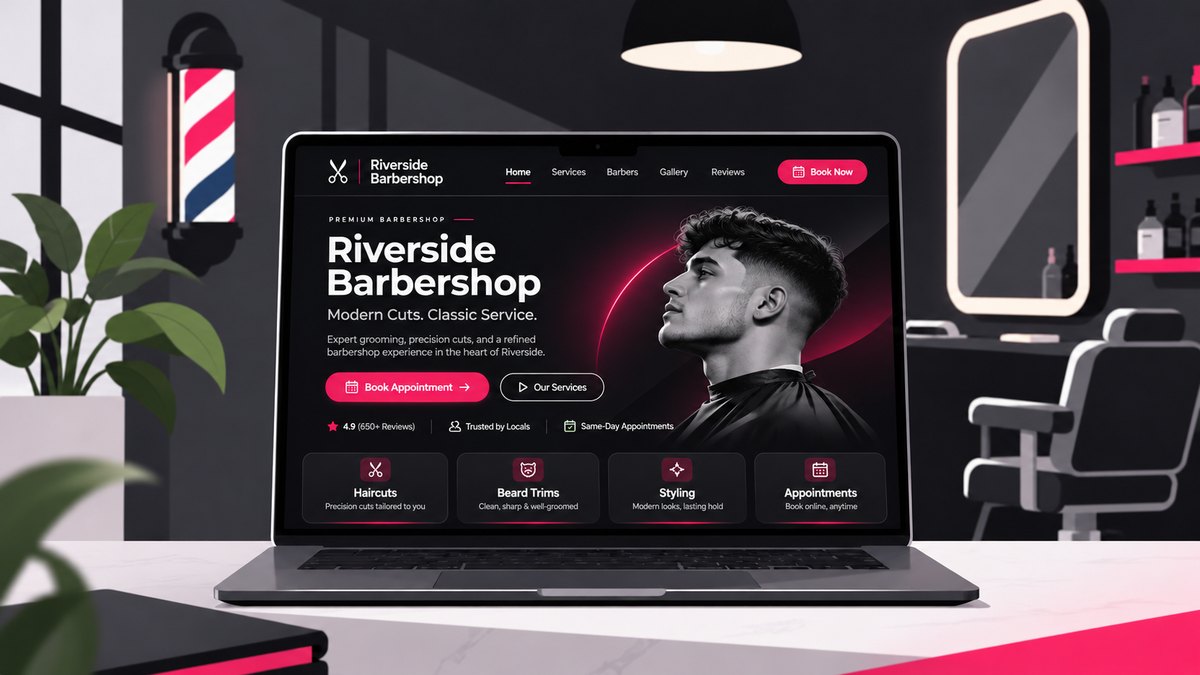
For example, a local barbershop might only need a few pages displaying its services, hours, location, and a booking button.
A larger company might need customer accounts, online payments, inventory management, or integrations with other systems.
Both are websites, but the amount of work involved can be very different.
Several factors influence the final price.
A small website might include:
A larger website could require individual pages for dozens of services, locations, or products.
More pages generally mean additional work for content organization, design, and testing.
Some businesses need a straightforward website with a clean, professional layout.
Others want unique animations, custom illustrations, advanced interactions, or a highly personalized visual identity.
More complex design requirements can increase development time and cost.
A website displaying information is typically less complex than one that needs specialized functionality.
For example, additional work may be needed for:
Before paying for these features, consider whether they are actually necessary for your business.
Sometimes, connecting an existing booking or payment platform is more practical than developing an entirely new system.
Small businesses generally have three approaches to consider.
Platforms such as Wix, Squarespace, and WordPress allow business owners to create websites without necessarily hiring a professional designer.
This approach can work well for people who enjoy working with technology and have time to learn the platform.
Advantages:
Disadvantages:
Building a website yourself can be a reasonable option, especially if your business is just starting.
However, it's important to consider the value of your time.
If creating the website takes several weekends away from running your business, hiring someone might be worth considering.
Freelancers can offer a wide variety of services, from simple informational websites to advanced custom projects.
Pricing varies based on experience, the project's scope, and the services included.
Some freelancers offer affordable fixed-price packages. Others provide custom quotes based on the estimated work.
When evaluating a freelancer, look beyond the initial price.
Ask who will maintain the website, what happens if something breaks, and whether the website can be updated or transferred in the future.
A lower initial quote isn't necessarily a better deal if essential services are excluded.
Website design agencies may provide a broader range of services, including design, development, branding, content strategy, and ongoing support.
Some agencies focus on complex websites for larger organizations.
Others, like WebFoundry, focus on more accessible website solutions for small businesses.
The cost depends on what the agency actually provides.
A relatively simple website won't necessarily require the same investment as a large e-commerce platform or custom business application.
At WebFoundry, our goal is to make professional website design more accessible to small businesses.
We offer two standard website packages:
| Package | One-Time Website Price | Monthly Website Care |
|---|---|---|
| Essential Website Package | $399 | $35/month |
| Professional Website Package | $599 | $35/month |
The $35/month Website Care service is required with both standard packages.
Our Essential package is designed for businesses looking to establish a professional online presence without unnecessary complexity.
It's a starting point for businesses that need to clearly introduce themselves, explain their services, and make it easier for customers to get in touch.
Estimated project timeline: 1–3 days after receiving the necessary materials and information, excluding time spent waiting for client responses or approvals.
Our Professional package is designed for businesses seeking a more comprehensive website experience.
It may be a better fit for businesses with broader content or design requirements.
Estimated project timeline: 2–5 days after receiving the necessary materials and information, excluding time spent waiting for client responses or approvals.
The specific features and deliverables included in each package should always be confirmed before purchasing.
Both packages include a required $35/month Website Care subscription.
This recurring service supports ongoing hosting, maintenance, and website monitoring under the applicable service terms.
Rather than focusing only on the initial website price, business owners should understand what ongoing support is included and what changes might require additional work.
The initial design price isn't always the complete cost of operating a website.
Depending on the provider and services selected, there may be additional expenses.
A domain name is the address customers use to find your website.
For example:
yourbusiness.com
Domain registrations generally need to be renewed periodically, usually annually.
The price depends on the domain extension, registrar, and renewal terms.
Make sure you understand who registers and controls your domain.
Hosting is the service that makes your website accessible online.
Some website builders include hosting in their subscription plans, while other providers charge for it separately.
Ask whether hosting is included in the monthly fee or requires a separate payment.
Websites may require ongoing maintenance, including technical fixes, compatibility updates, and security-related work.
Some providers include routine support in a monthly care plan.
Others charge separately.
Before signing an agreement, clarify which updates are included and which are considered additional services.
Additional costs may apply if your website connects to external platforms.
Examples include:
Not every business needs these services.
Choose them based on actual business requirements rather than adding features simply because they're available.
When comparing website providers, it's helpful to consider the total cost rather than only the initial payment.
Let's use WebFoundry's published standard pricing as an example.
| Expense | Amount |
|---|---|
| Initial website development | $399 |
| Website Care for 12 months | $420 |
| Total first-year cost | $819 |
| Expense | Amount |
|---|---|
| Initial website development | $599 |
| Website Care for 12 months | $420 |
| Total first-year cost | $1,019 |
These examples assume 12 monthly care payments and exclude taxes, domain costs, optional services, and other additional charges.
The actual amount paid during a particular calendar year depends on when the website and subscription begin.
These calculations illustrate why it's important to understand both upfront and recurring costs when comparing website services.
A website can be valuable, but its value depends on what it helps your business accomplish.
For example, imagine a local auto detailing business.
Potential customers might want to compare detailing packages, view previous work, and request an appointment.
A well-designed website can organize all that information and make the next step easier.
For a landscaping company, a website could showcase completed projects and provide an estimate request form.
For a photographer, it might highlight portfolios and help prospective clients inquire about availability.
These are practical benefits.
However, a website doesn't automatically generate sales.
The outcome depends on factors such as customer demand, website usability, marketing efforts, and how effectively the business responds to inquiries.
A professional website should support your overall business strategy—not replace it.
Before purchasing a website, ask the provider a few important questions.
What's included in the initial price?
Make sure you understand which pages, design services, and features are included.
Are there recurring fees?
Ask about hosting, maintenance, subscriptions, and any other ongoing costs.
Who controls the domain?
Understand how domain ownership and renewal will work.
Can I request updates later?
Clarify which changes are included in ongoing support and whether larger modifications cost extra.
How long will development take?
Ask about the estimated timeline and what information you'll need to provide.
What happens if I stop using the provider?
Review the contract to understand website access, hosting, ownership, and any available transfer options.
These questions can help prevent unexpected expenses and misunderstandings later.
Before comparing providers, identify what your business actually needs.
A useful starting point is to consider three questions.
Do you want customers to call, request quotes, schedule appointments, browse services, or purchase products?
Identify the most important actions first.
Think about the questions people ask before buying from your business.
Your website should help answer those questions clearly.
Some business owners prefer managing their websites themselves.
Others want a provider that handles routine technical work so they can focus on operating their business.
Neither approach is automatically better.
The right option depends on your time, budget, and comfort with technology.
There's no single website price that's right for every small business.
A simple informational website and a complicated online store have very different requirements.
The best approach is to choose a solution that fits your actual needs, provides a professional customer experience, and has clearly explained upfront and ongoing costs.
For many local businesses, the priority isn't having the most expensive website.
It's having a website that looks professional, communicates clearly, and makes contacting the business convenient.
At WebFoundry, we help small businesses create modern, professional websites without unnecessary complexity.
Whether you're launching your first website or considering improvements to an existing one, we offer free, no-obligation website assessments to help identify opportunities for improvement.
Explore our website packages or request a free assessment at:
Better websites start with understanding what your business actually needs.